

Quick Answer
You should replace siding instead of repairing it when damage affects multiple walls, keeps coming back, or shows signs of moisture problems, warping, severe fading, loose panels, or hidden deterioration. Siding repair can make sense for one or two isolated damaged panels, but full siding replacement is usually the better option when several areas of the home are affected.
What Should Muncie Homeowners Know About Siding Repair vs. Replacement?
Siding plays a major role in how your home looks and how well the exterior is protected from weather. When siding starts to crack, warp, fade, loosen, or show signs of moisture damage, many homeowners wonder whether a repair is enough or if replacement makes more sense.
For homeowners dealing with siding damage in Muncie, the decision usually depends on whether the issue is isolated, recurring, moisture-related, or spread across multiple walls. A small damaged area may only need repair, but widespread siding issues often point to a bigger exterior problem.
True Crew Windows and Doors LLC helps homeowners understand their siding options with honest guidance, no-pressure consultations, and professional exterior remodeling support.
When Is Siding Repair Usually Enough?
Siding repair may be enough when the damage is small, isolated, and not connected to a larger moisture or installation problem. For example, if one panel is cracked from impact or a small section comes loose after heavy wind, repair may be a practical option.
Repair can also make sense when the rest of the siding is still in good overall condition and the color or style can still be matched. The key is making sure the damage is truly limited. If you are comparing siding repair in Muncie with full siding replacement, the condition of the entire exterior matters more than one damaged panel.
If the same area keeps needing attention, or if several areas are starting to fail at the same time, repair may only be a short-term fix.

When Is Siding Replacement the Better Choice?
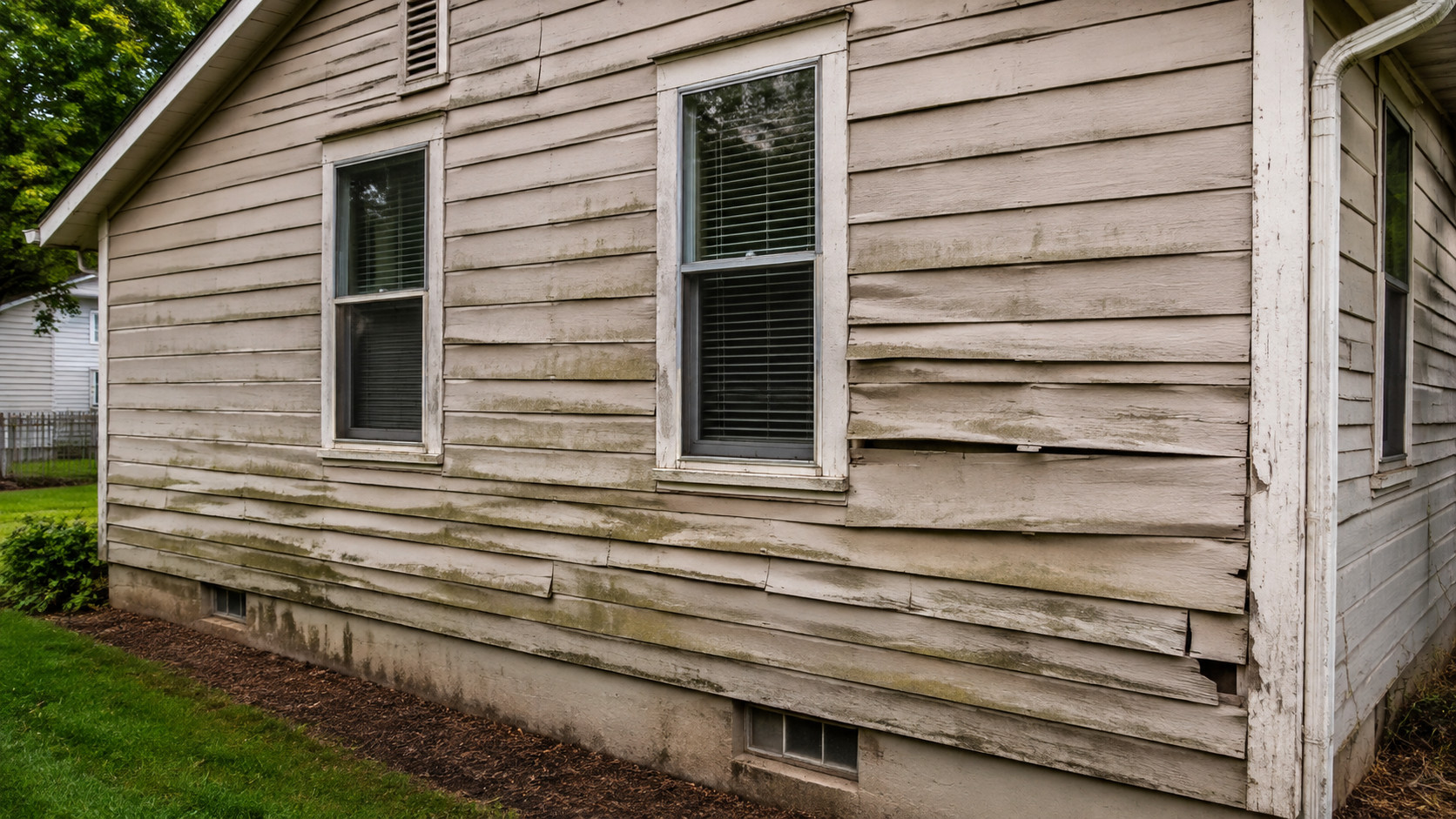
Siding replacement is usually the better choice when the siding has widespread damage, recurring problems, or signs that the material is no longer performing well. This can include warping across multiple walls, cracks in several places, siding that keeps coming loose, severe fading, brittleness, or signs that moisture may be getting behind the exterior.
When problems appear across the home, repairing one section at a time can become frustrating and expensive. In those cases, replacing the siding may provide a cleaner, more reliable long-term solution and a more consistent appearance.
How Can You Tell If Siding Damage Is Isolated or Widespread?
The easiest way to compare siding repair vs. replacement is to look at how much of the home is affected. If the problem is limited to one small area and the rest of the siding is still solid, repair may be enough. If the same issue appears in several places, replacement is usually worth discussing.
| Siding Condition | Repair May Make Sense | Replacement May Make Sense |
|---|---|---|
| One cracked panel | Yes | Usually no |
| One small loose section | Yes | Usually no |
| Damage on one wall only | Maybe | Maybe, depending on cause |
| Warping on multiple walls | No | Yes |
| Repeated loose panels | No | Yes |
| Moisture signs behind siding | No | Yes |
| Severe fading across the home | No | Yes |
| Old siding with recurring repairs | No | Yes |
This table is not a substitute for a full inspection, but it gives homeowners a practical way to think through the decision before scheduling an estimate.
What Siding Problems Should Homeowners Not Ignore?
Some siding problems may seem cosmetic at first but can point to bigger concerns. Warping or buckling may suggest the siding is no longer sitting properly against the home. Soft spots, staining, mold, mildew, or musty odors near exterior walls can point to moisture concerns.
Loose panels after one storm may be repairable, but repeated loose panels can mean the siding is no longer secure. Cracking in several areas may also be a sign that the material has become brittle or aged. Fading is not always urgent, but severe or uneven fading can make the home look older and may come with other signs of wear.
When siding damage affects performance, not just appearance, it is time to look more closely.
Does Faded Siding Need to Be Replaced?
Faded siding does not always need to be replaced, but it can be one sign that the material is aging. If fading is mild and the siding is still secure, repair, cleaning, or smaller updates may be enough.
If the fading is severe, uneven, or paired with cracking, brittleness, warping, or loose panels, replacement may be the better option. For many homeowners, faded siding is also a curb appeal decision. New siding can give the home a cleaner, more updated look while also addressing performance concerns if the existing material is aging.
Can Moisture Damage Mean Siding Replacement Is Needed?
Yes. Moisture damage is one of the biggest reasons siding replacement may be needed instead of repair. Siding is supposed to help protect the home from weather, so if water is getting behind it, the issue may affect more than the surface panel.
Swelling, soft areas, staining, mold, mildew, peeling paint inside nearby walls, or repeated damage in the same area can all suggest moisture may be involved. If moisture is part of the problem, simply replacing one visible panel may not solve the issue. The underlying cause should be reviewed before deciding whether repair or replacement makes sense.
Is Recurring Siding Repair a Sign You Should Replace It?
Recurring siding repair is often a sign that replacement should be considered. One repair may be normal, but repeated repairs are different. If panels keep coming loose, cracks keep spreading, or moisture problems keep returning, the siding may no longer be performing the way it should.
At that point, homeowners should compare the cost and inconvenience of repeated repairs against the long-term value of replacement. A full replacement may cost more upfront, but it can be the more practical option when repairs are becoming a pattern.
How Should Muncie Homeowners Decide Between Siding Repair and Replacement?
A good siding decision starts with a careful look at the condition of the entire exterior, not just the most obvious damaged spot. Ask whether the damage is limited to one small area, whether the same issue has happened before, whether several walls are showing wear, and whether there are signs of moisture behind the siding.
It also helps to consider whether the existing siding can still be matched and whether another repair would truly solve the problem. If the issue is small and isolated, repair may be reasonable. If the siding is old, brittle, faded, warped, moisture-damaged, or repeatedly needing work, replacement may be the smarter long-term choice.
How Can Homeowners Get Help Evaluating Siding?
If you are unsure whether your siding needs repair or replacement, it helps to have a professional look at the full exterior. The goal is not to push replacement when repair would work. The goal is to understand what is happening and choose the option that makes the most sense for your home.
True Crew Windows and Doors LLC provides siding replacement in Muncie and North Central Indiana with honest recommendations, no-obligation consultations, and professional installation. If your siding damage is widespread or repairs are becoming a pattern, learn more about True Crew’s siding replacement services.
You can also view recent exterior remodeling projects in the gallery or request a no-obligation siding consultation through the contact page.
Frequently Asked Questions About Siding Repair vs. Replacement
You should repair siding when the damage is small, isolated, and the rest of the siding is still in good condition. Replacement may be better when damage is widespread, moisture-related, recurring, or affecting multiple areas of the home.
Common signs include widespread warping, loose panels, cracks in several areas, severe fading, moisture damage, soft spots, mold or mildew near seams, and repeated repairs. These issues may mean the siding is no longer protecting the home properly.
Yes. One damaged siding panel can often be repaired if the rest of the siding is in good shape and a matching panel is available. If the siding is old or faded, finding an exact match may be difficult.
Faded siding does not always require replacement, but severe or uneven fading can make the home look older and may indicate the material is aging. If fading is paired with cracking, brittleness, warping, or loose panels, replacement may be worth considering.
If siding damage keeps coming back, homeowners should contact an exterior remodeling professional who can look at the full siding system, not just one damaged panel. Recurring siding problems may point to moisture, installation issues, aging materials, or widespread exterior wear.